When buying a home in Florida with another person, one of the most important decisions you'll make is how you'll hold title to the property. While many buyers focus on the purchase price, mortgage, and inspections, the way you own the home can have major legal and financial consequences down the road.
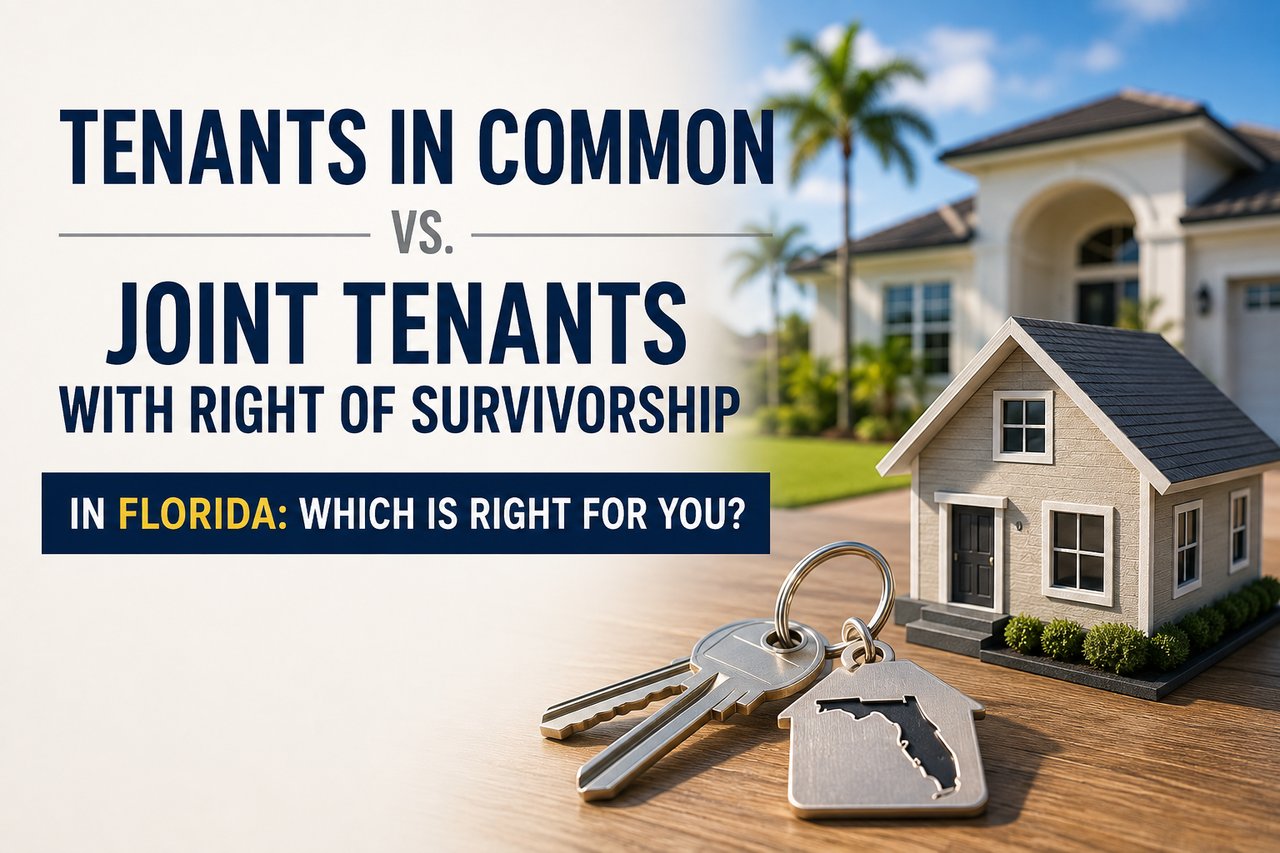
The two most common ways for two or more people to own real estate together are Tenants in Common (TIC) and Joint Tenants with Right of Survivorship (JTWROS). Understanding the differences can help you choose the ownership structure that best fits your situation.
What Is Tenants in Common?
A Tenants in Common ownership allows two or more people to own the same property, even if they own different percentages.
For example:
- Person A owns 75%
- Person B owns 25%
Or each owner can simply own an equal share.
One of the biggest advantages is flexibility. Each owner can sell, transfer, or leave their ownership interest to someone else without affecting the other owners.
What Happens If an Owner Passes Away?
With Tenants in Common, an owner's share becomes part of their estate. It passes according to their will or, if there is no will, under Florida's inheritance laws.
The surviving owners do not automatically inherit the deceased owner's share.
Common Uses
Tenants in Common is often used when:
- Friends purchase a home together.
- Siblings inherit or buy property together.
- Real estate investors purchase investment properties.
- Owners contribute different amounts toward the purchase.
What Is Joint Tenants With Right of Survivorship?
Joint Tenants with Right of Survivorship means each owner has an equal ownership interest in the property.
The defining feature is the right of survivorship.
If one owner dies, their ownership interest automatically transfers to the surviving owner(s). This transfer happens outside of probate and does not depend on a will.
For example:
Two friends each own 50% of a home.
If one passes away, the surviving owner automatically becomes the sole owner.
Common Uses
Joint tenancy is commonly used by:
- Parents and adult children
- Close family members
- Friends purchasing a home together who want the surviving owner to automatically inherit the property
Key Differences
Ownership Percentage
Tenants in Common
- Owners can have different ownership percentages.
Joint Tenants
- All owners must have equal ownership interests.
Inheritance
Tenants in Common
- Ownership passes to heirs through the owner's estate.
Joint Tenants
- Ownership automatically transfers to the surviving owner(s).
Selling Your Share
Both ownership types generally allow an owner to sell or transfer their interest. However, doing so may affect how the property is owned going forward and could eliminate the right of survivorship for that owner's interest.
What About Married Couples?
Florida offers another ownership option exclusively for married couples called Tenancy by the Entireties (TBE).
This form of ownership includes a right of survivorship like joint tenancy, but it also provides additional legal protections, including significant protection from the creditors of only one spouse in many situations.
Because of these added benefits, Tenancy by the Entireties is often the preferred way for married couples to hold title to their primary residence and other jointly owned property.
Which Option Is Best?
There isn't one answer that fits everyone.
Tenants in Common may be the better choice if you:
- Want unequal ownership shares.
- Want your share to pass to your heirs.
- Are purchasing an investment property with partners.
Joint Tenants with Right of Survivorship may be better if you:
- Want the surviving owner to automatically inherit the property.
- Want to avoid probate for the property.
- Are purchasing with someone you want to become the sole owner if you pass away.
Married couples should also discuss whether Tenancy by the Entireties is the most appropriate option for their situation.
Final Thoughts
The way you take title is just as important as the home you choose. While many buyers never think about it during closing, your ownership structure can affect inheritance, probate, future sales, and even creditor protection.
Before closing on a Florida home, it's worth discussing your options with your real estate agent, title company, and, when appropriate, an attorney so you fully understand the legal and financial implications of each type of ownership.
Making the right decision today can save significant time, expense, and stress in the future.