Florida’s housing market appears to be finding its footing after several challenging years, with encouraging signs emerging across the state. While the market is certainly not experiencing the kind of rapid boom seen during the pandemic years, sales are picking up, buyer activity is improving and several segments of the market are showing meaningful growth.
Florida Realtors Chief Economist Dr. Brad O’Connor recently shared an update on the state’s housing market during the Florida Realtors Convention & Trade Expo, highlighting a number of trends that could shape the market heading into the rest of 2026 and beyond.
One of the biggest takeaways is that Florida has now experienced 11 consecutive months of year over year increases in closed home sales through July. Even more encouraging, new pending sales have increased compared with the same period a year earlier for 12 consecutive months.
That represents an important change for a market that experienced three straight years of declining sales.
O’Connor emphasized that the current environment should not be mistaken for another housing boom. Instead, the numbers suggest that the market is gradually returning to a healthier level of activity as buyers and sellers who had been waiting on the sidelines begin making moves again.
For homeowners and prospective buyers, that shift could be significant. Many people have delayed purchasing, selling or relocating because of higher mortgage rates, elevated home prices and uncertainty about where the market was headed. The latest numbers suggest some of those people are becoming more comfortable moving forward.
Inventory is also playing an important role in the changing market.
Florida’s number of active listings is below where it was a year ago, and single family home inventory has moved closer to what economists generally consider a balanced market. At the same time, today’s inventory levels remain well below the enormous supply Florida experienced during the housing crisis of 2008.
That distinction is important because today’s market is very different from the conditions that existed during the last major housing downturn. While buyers have more choices than they did during the extremely competitive market of a few years ago, Florida does not currently have the massive oversupply of homes that contributed to the previous housing collapse.
The condominium and townhouse market continues to follow a somewhat different path.
There are still more condos and townhomes available compared with single family properties, and these homes are generally taking longer to go under contract. However, there is an interesting twist. Condo and townhouse sales have actually been posting stronger year over year growth than single family home sales so far this year.
That could indicate that buyers are beginning to take another look at condos as pricing becomes more attractive in some areas. For buyers who are primarily interested in location, amenities and lower maintenance, condos can offer an alternative to purchasing a single family home, particularly in Florida’s coastal communities.
Another area showing considerable strength is the higher end of the market.
Sales of homes priced between $500,000 and $1 million were up 7% year to date, while sales of properties priced at $1 million or more increased an impressive 22.4%.
The growth in luxury sales is also not limited to South Florida. O’Connor noted that higher end activity is taking place throughout the state, demonstrating that Florida’s luxury market continues to attract buyers across a wide range of communities.
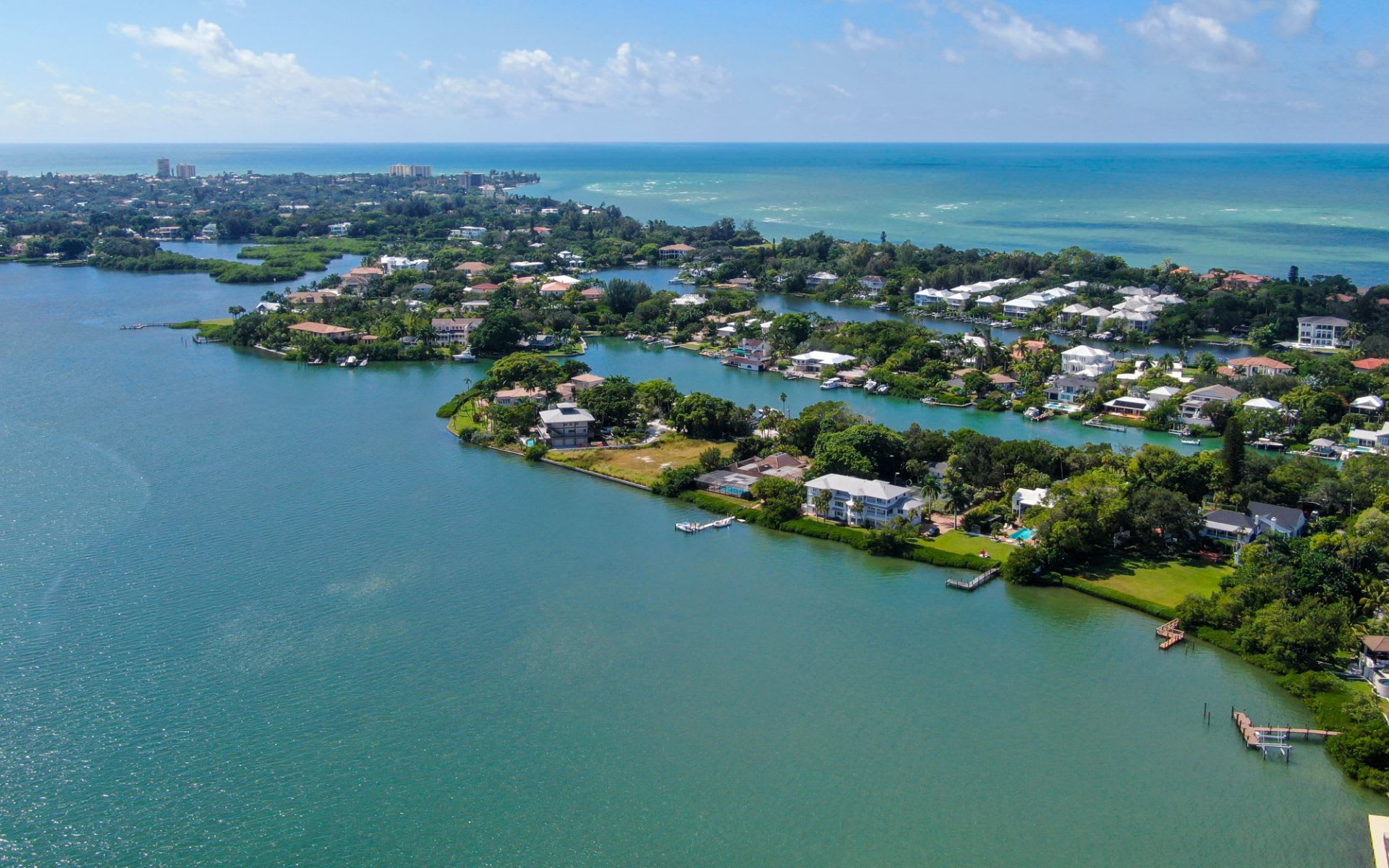
That trend is particularly relevant for areas such as Sarasota and the surrounding Gulf Coast, where higher priced homes, waterfront properties and luxury communities represent an important part of the local real estate market.
Florida’s population growth is another factor helping support housing demand.
The state continues to attract people relocating from other parts of the country, and driver’s license exchange data remain above pre pandemic levels. More recent figures also suggest that migration may be beginning to increase again.
For Florida, continued population growth is closely connected to housing demand. New residents need places to live, whether they are purchasing homes, renting apartments, relocating for work or moving closer to family.
That continued influx of residents can also have an impact beyond residential real estate. New homeowners and renters create additional demand for restaurants, retail stores, medical services, construction, tradespeople and other businesses. As a result, population growth can contribute to broader economic activity throughout communities.
Of course, mortgage rates remain one of the biggest factors affecting affordability.
Higher borrowing costs have made monthly mortgage payments considerably more expensive for many buyers compared with several years ago. That has caused some potential buyers to delay their plans while waiting for rates to improve.
But O’Connor pointed out that the recent increase in sales suggests mortgage rates are not the only factor influencing decisions anymore.
There are still plenty of people who need to move and others who have been waiting for the right opportunity. Life changes such as new jobs, retirement, marriage, divorce, growing families and relocation can create housing needs regardless of what interest rates are doing.
The good news is that affordability does not necessarily have to improve through a dramatic decline in mortgage rates alone.
Income growth could gradually help close the affordability gap. If wages and household incomes continue to increase while home prices and mortgage rates remain relatively stable, buyers may slowly find homes becoming more affordable relative to their income.
That could bring additional buyers back into the market over time.
For sellers, the changing environment also provides an important reminder that today’s market requires realistic expectations. Buyers have more choices than they did during the frenzy of 2020 and 2021, meaning properties need to be priced appropriately and presented well in order to stand out.
For buyers, the increase in inventory compared with the extremely tight market of recent years can create opportunities to take more time, compare properties and negotiate. The market is becoming more balanced, which can make the process feel considerably less rushed than it did just a few years ago.
Overall, Florida’s housing market appears to be moving in a healthier direction. The state is not returning to the extraordinary conditions of the pandemic housing boom, and that is not necessarily a bad thing.
Instead, the latest numbers point toward a market where buyers and sellers are gradually becoming more active, inventory is adjusting, higher priced properties are performing well and population growth continues to provide underlying demand.
For Florida homeowners and anyone considering a move, the biggest story may simply be that people are beginning to move again.
After several years of declining sales, 11 consecutive months of year over year sales growth is an encouraging sign. If incomes continue to rise, inventory remains relatively balanced and mortgage rates eventually become more manageable, Florida’s housing market could continue making steady progress throughout the coming year.